
Route: Sofia – Bansko – Devin – Plovdiv – Karlukovo
Day 1 – Sofia
Arrival at Sofia airport. Transfer to the hotel. Sofia is Bulgaria’s capital and its largest city. Founded thousands of years ago, today the city continues to develop as the country’s cultural and economic center. Sofia is located in the western part of the country, on The Sofia Plain and on the lower slopes of Mount Vitosha. On a strategic crossroads on the route from Western Europe to Istanbul, The Near East and The Middle East, lying between The Danube River and The White Sea on the one hand, and between The Black Sea and The Adriatic on the other.
These scenes are shot in the city center.
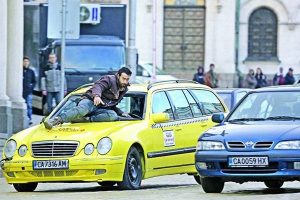
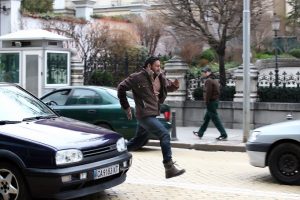
Walking tour – The Presidency, The Round Church “St. George” – the oldest preserved building in the city, built at a time when Sofia was the residence of the emperors Galerius and Constantine the Great, The Ancient Serdica archaeological complex, largely below street level and covering an area of about 9000 sq m, includes eight streets, an early Christian basilica – believed to have been built in two stages in the fourth to late fifth centuries. A major attraction within the complex is the Decumanus Maximus, which would have been the main street in Roman times of the city that later would become Sofia.
The Russian Church, officially known as the Church of “St.Nicholas” is a Russian Orthodox church, one of the most remarkable buildings in Sofia. It was built in the period between 1907 and 1914. The grave of Archbishop Seraphim Sobolev is laid in the temple crypt. The archbishop was considered a miracle maker by many orthodox Christians.
The Cathedral temple “St. Alexander Nevski“ is considered a symbol of the Bulgarian capital. The temple interior is unique – it impresses with its magnificent marble decorations, with its mural paintings and 82 icons, made by Bulgarian, Russian and Czech artists. The marble iconostasis, the royal and patriarchal thrones and the pulpit are of greatest interest for the visitors of the temple. Another valuable item is the mosaic mural of Tsar Ferdinand (ruled 1887 – 1918) and Queen Eleanor.
The church “St. Sofia” is situated in the center of Bulgaria’s capital, in close proximity to the Monumental Temple “Alexander Nevski”. It is one of the oldest churches in Sofia and its history is closely related to the history of the city. Nowadays the temple is considered one of the symbols of Sofia. The church was built in the 6th century during the time of the Byzantine Emperor Justinian (reigned 527 – 565) on the foundations of 4 older Christian temples from the 4th century. The church “St. Sofia” was built on the place of the necropolis of the city of Serdika (the old name of Sofia) and other older churches from the 4th century and dozens of masonry tombs. Fragments of the mosaic of one of the older temples were found during archaeological excavations. It is considered that the building can house up to 5 thousand people. During the period of the 11th – 14th century it was a metropolitan church and its glory was so great that in the 14th century it gave its name to the city. Overnight stay in Sofia.
Day 2
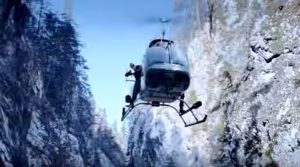
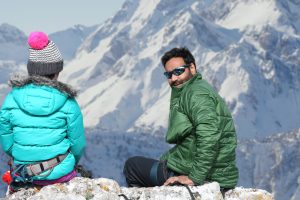
Departure to Bansko. Bansko is one of the largest winter resorts of Bulgaria, situated on 925 meters above the sea level at the foot of the Pirin mountain – at a distance of 150 km from Sofia. Over the years, Bansko gradually established itself as one of the leading winter ski resorts in the country and the region, which attracts many Bulgarian and foreign tourists. Some of the most dangerous scenes were shot at Vihren peak at a height of 2914 meters above sea level. Devgn chose the Vihren peak due to its impressive and powerfully dominating presence with its breathtaking high wall. There was heavy snowfall the night before and the temperatures unusually were running record low at the time for the season. Due to the extreme cold, Devgn suddenly got hypothermia. The Doctor advised at least 2 days of rest but Ajay Devgn was back in 30mins inspite of the temperature that they were shooting in. It was -19 degrees Celsius.Walking tour of Bansko. Visit to the Holy Trinity Church. The Holy Trinity Church and especially its tall belfry have become a symbol of Bansko. The Church dedicated to the Holy Trinity was built in the period of the Bulgarian National Revival. Its inauguration was made in 1835. The church presents a masterpiece of beautiful synthesis between architectural volumes and spaces, woodcarving, frescos and icons. Visit to the Neofit Rilski House Museum was opened to the public in May 1981 to mark the centennial of Neofit Rilski’s death. The house has been managed by relatives of Neofit Rilski until it became a permanent museum exhibit. Visit to the Velyan’s House in Bansko located near the Holy Trinity Church and the central square of the town. The house is an example of the architectural style – fortified house of the Bulgarian Revival Period. Velyan’s House was built in the 18th century and was opened to visitors in 1977. Overnight stay in Bansko.
Day 3
Departure to Devin. Devin is located in the central part of the Rhodope Mountains. There is an abundance of hot springs and hence spa resorts in the area. The region was known in antiquity for the healing properties of its mineral springs. The conditions available in Devin make it a centre for recovery and stabilising health. The situation of Devin offers access to nearby gorges, rock formations, caves, forests, natural reserves with protected and endemic species, and most of all, clean air. The Trigrad Gorge is a canyon of vertical marble rocks in the Rhodope Mountains. The gorge encloses the course of the Trigrad River, which plunges into the Devil’s Throat Cave. The gorge’s west wall reaches 300 metres in height, while the east one extends up to 300–350 metres. The gorge has a total length of 7 kilometres.
These scenes are shot here.
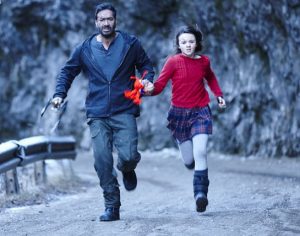
Visit to The Trigrad Gorge and the Devil’s Throat Cave.
It is a typical Bulgarian one-lane mountain road, with traffic in both directions. To drive this narrow, winding road requires considerable attention and tolerance, since cars traveling in opposite directions can’t pass each other. Because this narrow road is squeezed between the river on one side and the sheer cliffs on the other, travelers get the impression that Trigrad is much more distant than it is, and that the village is guarded by stone fortress walls closely guarding the mountain’s secrets. Overnight stay in Devin.
Day 4
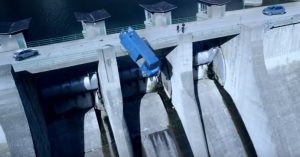
Departure to Plovdiv. Passing Vacha dam.
These scenes are shot here.
Plovdiv is the oldest inhabited city in Europe – the beginning of its history dates back to 4,000 years BC. The town in its present appearance was built around seven hills – the hills of Plovdiv (Plovdiv Tepes) which are an inseparable part of the city’s history. The city is one of the most popular tourist destinations in the country and a cultural and economic center of southern Bulgaria. In 2019 Plovdiv will be The European Capital of Culture.
Some of the scenes were shot in Plovdiv.
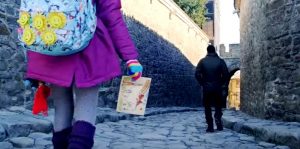
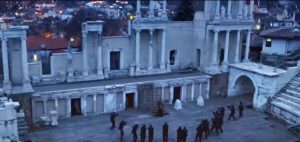
Walking tour in the Old town of Plovdiv. Ancient Plovdiv Architectural Reserve is a well-preserved complex where on a relatively small area visitors can take walks through different historical ages, see ancient buildings adapted to the modern way of life and feel the spirit of the town from the Bulgarian Revival Period. Hisar Kapia is a medieval gate in Plovdiv’s old town and one of the most famous tourist sights in the city. The gate was built in the 11th century AD over the foundations of a gate from Roman times (probably from the 2nd century AD). Hisar Kapia is one of the three entrances to the acropolis of ancient Plovdiv. The Regional Museum of Ethnography (№14) is the second largest museum of its kind in Bulgaria. It was founded in 1917, and in 1938 it relocated to the Kuyumdzhiev, declared a cultural landmark in 1995. Kuyumdzhiev`s House is one of the most remarkable Revival houses which is preserved in our lands it is the home of the Plovdiv merchant. It was built in 1847. It reflects the taste of the rich Plovdiver. Visit to the Antique theatre, one of the main public works of the Old Philipopolis. Except being a cultural venue, it played an important role for the social and political life of the town and the Roman province of Thrace. It was built in the time of the Emperor Trajan at the beginning of the 2 century. It is one of the best – preserved antique theatres in the world and the only antique theatre building on the Bulgarian lands. The theatre is adapted to Plovdiv’s present-day cultural life and it hosts a wide range of various performances for about 5000 viewers. Overnight stay in Plovdiv.
Day 5
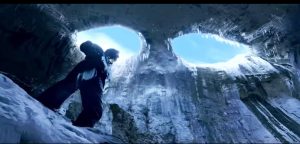
Departure to Karlukovo, a village in Lukovit Municipality, Lovech Province. Prohodna is a karst cave in north central Bulgaria, located in the Iskar Gorge near the village of Karlukovo. The cave is known for the two eye-like holes in its ceiling, known as the Eyes of God. Prohodna is the best known attraction in the Karlukovo Gorge, one of the largest karst regions in Bulgaria and a popular location for speleology. The cave is 262 metres long, which makes it the longest cave passage in Bulgaria. The former is 35 metres high and the latter reaches 42.5 or 45 metres in height.
Departure to Sofia. Overnight stay in Sofia.
Day 6
Free time for shopping. Transfer to the airport. Departure.
